
World Heritage Sites are landmarks and areas with legal protection by an international convention administered by UNESCO for having cultural, historical, or scientific significance. The sites are judged to contain “cultural and natural heritage around the world considered to be of outstanding value to humanity”.
To be selected, a World Heritage Site is nominated by its host country and determined by the international committee to be a unique landmark which is geographically and historically identifiable and has a special cultural or physical significance. For example, World Heritage Sites might be ancient ruins, historical structures, buildings, cities, deserts, forests, islands, lakes, monuments, mountains or wilderness areas.
A World Heritage Site may signify a remarkable accomplishment of humanity, and serve as evidence of our intellectual history on the planet or it might be a place of great natural beauty. As of August, 2025 there are 2,048 World Heritage Sites, most cultural and fewer natural sites in 170 countries. With 61 selected areas, Italy has the most, followed by China 60, Germany 55 and France 52.
The sites are intended for practical conservation for posterity, which otherwise would be subject to risk from human or animal trespassing, unmonitored, uncontrolled or unrestricted access, or threat from local administrative negligence. Sites are demarcated by UNESCO as protected zones.
The programme catalogues, names, and conserves sites of outstanding cultural or natural importance to the common culture and heritage of humanity. The programme began with was adopted by the General Conference of UNESCO on 16 November 1972. Since then, 195 states have ratified the convention, making it one of the most widely recognized international agreements and the world’s most popular cultural programme. To be considered, the properties must be under state protection or conservation and be nominated by the host member country.
The UNESCO-administered project has attracted criticism. This was caused by the perceived under-representation of heritage sites outside Europe, disputed decisions on site selection and the adverse impact of mass tourism on sites unable to manage rapid growth in visitor numbers. A large lobbying industry has grown around the awards because World Heritage listing can significantly increase tourism returns. Site listing bids are often lengthy and costly, putting poorer countries at a disadvantage. Eritrea’s efforts to promote Asmara are one example. Each year 28-40 are moved from the Tentative WHS list of 1723 sites yearly. This can be quite political but requires an extensive application procedure and requirements for inclusion.
There are two main sites for information on World Heritage Sites.
World Heritage List — https://whc.unesco.org/en/list/ gives the background and criteria for inclusion. The posts are wordy with redundant info. They are good for serial listings. They have no practical information on how to visit.
World Heritage Sites – https://www.worldheritagesite.org. This lists WHS by country. It gives a brief overview and a map that I find has little value. The best content is the reviews. Outlining the logistics and personal experiences makes it a great resource of practical info. Many of its member’s travel is limited to WHS.
Wikipedia, blogs, and local websites are additional sources of information.
Zoë Sheng. From Canada, she has probably visited over 1,100 WHS by 2025. I believe WHS are her only destination. She has visited 150 UN countries. She does extensive research and has plans to see as many of her remaining sites as possible. Some are impossible (Gough and Inaccessible Islands) or can only be seen by chartered tours (Henderson Island) or boat (Bikini Atoll, Macquarie Island, Sub-Antarctic Islands, NZ, Henderson Island, Heard and McDonald Island, Aldabra Atoll, Tanzania, Rio Platano Biosphere Reserve, Honduras). A 30-day cargo ship Is necessary for French Austral Lands and Seas, Some are remote (Mongolian sites, Tajik National Park). And some are presently inaccessible (Tauric Chersonese is in Crimea and presently off-limits).
Thomas Buechler. From Switzerland, Thomas is one of the most travelled people and sees a wide range of destinations. In August 2025, he had visited 1,005 WHS and was first in the Nomad Mania listing.
Els Slots. From the Netherlands, she is the founder of www.worldheritagesite.org and I believe her only destinations are WHS. In August 2025, she had visited 983 WHS and was second in Nomad Mania.
Ron Perrier. By August 2025, he had visited 925 WHS and was fifth in NM. With his 699 Tentative WHS, he was first in the world. WHSs are a major focus of his travel.
PROTECTION OF WORLD HERITAGE SITES – Is World Heritage Site status enough to save endangered sites?
For 50 years, UNESCO’S venerable list has recognized places of “outstanding universal value” for protection. But it comes with challenges from development to overtourism.

In December 2016, the city government of Vienna, Austria, announced what sounded like welcome news at the time: A public-private partnership had formed to build a new ice-skating rink just outside the city’s century-old Wiener Konzerthaus.
For those who have visited the luminous birthplace of Beethoven, Mozart, and Freud, two characteristics quickly become evident. First, the core of Vienna is an architectural dreamscape of baroque palaces, immaculate courtyards, and a neo-Gothic city hall. Second, Austrians love winter sports, which has manifested itself in a ritual that takes place in the heart of Vienna at the beginning of every year since 1996: the construction of a seasonal ice-skating rink, or Eistraum (“Ice Dream”), which draws hundreds of thousands of visitors.
In other words, ice-skating is as Viennese as sausages and symphonies. So the idea of a permanent rink, housed inside a high-rise complex to minimize obstruction to pedestrians, would not have been expected to invite controversy. But one important stakeholder strenuously objected: the UNESCO World Heritage Committee, which decreed that the new complex would undermine central Vienna’s “outstanding universal value. Vienna’s historic city center has been a UNESCO World Heritage site since 2001, one of the organization’s 1,154 unique landmarks around the globe deemed worthy of protection. Since announcing its objection to the high-rise rink in 2017, the World Heritage committee has kept Vienna on its “in danger” list—joining 50 other embattled sites, from the ancient villages of northern Syria to Everglades National Park in Florida. If the city fails to satisfactorily address the committee’s concerns, it risks being permanently “de-listed” as a UNESCO landmark.
(Here’s how World Heritage status helps destinations around the world.)
Protecting an anything-but-static urban area like Vienna’s historic city center is an inherently fraught proposition. It’s one of several challenges that UNESCO’s program has struggled to overcome since its inception in 1972. Foremost among these involves its central charter: to promote cultural awareness by drawing attention to emblematic monuments, landscapes, and habitats around the world.
Challenges to Protecting World Heritage Sites
The World Heritage designation has unquestionably succeeded in attracting visitors to isolated, often economically disadvantaged places. Its track record has been mixed, however, when it comes to preventing the flow of tourists from becoming a deluge. For example, the once somnolent village of Hoi An, on Vietnam’s central coast, now faces a crush of visitors that its narrow streets cannot accommodate.
Some locales have succeeded in managing overtourism on their own, like Dubrovnik, Croatia, which, under pressure from UNESCO, capped the number of visitors in its historic center.
Then there are Cambodia’s 12th-century temples at Angkor Wat, at one time accessible only to priests. The temples were attracting 22,000 annual visitors when they were inscribed as a World Heritage site in 1992. Today, that number is five million and is expected to double by 2025.
(Angkor Wat, the world’s biggest religious complex, is sacred to two faiths.)
UNESCO has preferred to frame its work at Angkor as “a model for the management of a huge site that attracts millions of visitors and sustains a large local population.” But as the organization has also conceded, mass tourism has threatened the region’s water table, which in turn has imperiled the stability of the temples themselves.
Insulating World Heritage sites from malevolent actors has long been beyond UNESCO’s capabilities. The deliberate targeting of a country’s cultural treasures as a show of military belligerence has been all too common—from Aleppo, Syria, to Sana’a, Yemen. Famously and tragically, it could not halt the Taliban’s destruction of the towering Bamiyan Buddhas in Afghanistan in 2001.
Still, UNESCO’s influence can extend only so far. In Laos, for example, the government has proceeded with plans to construct a dam on the Mekong River near the ancient capital of Louangphabang, despite UNESCO’s insistence that a heritage impact assessment takes place beforehand.
Climate Change Threatening World Heritage Sites
Of late, UNESCO has had to confront a newer enemy: climate change. In 2007, it published a paper written by scientists who alerted the organization to growing threats in 26 different World Heritage sites. These included glaciers and biodiversity hotspots, but also archaeological landmarks such as the sprawling pre-Hispanic earthen city at Chan Chan, Peru, due to intense precipitation brought by El Niño.
On this front as well, the organization has limited tools at its disposal. An example is Australia’s legendary Great Barrier Reef, a World Heritage site since 1981. Last year, UNESCO threatened to place the vast coral ecosystem on the “in danger” list if the Australian government did not more adequately work to reduce its greenhouse gas emissions—the first time in its history that climate change factored into such a warning.
After intense lobbying from the Australians, the committee deferred its decision until late 2022. In March, UNESCO dispatched a monitoring team to the reef. Although the Australian government has reportedly pledged roughly $125 million to protect the reef, it remains to be seen whether Australia’s historical aversion to a responsible national climate policy will be reversed.

(Once devastated, these Pacific reefs have seen an amazing rebirth.)
Perhaps the most famously at-risk World Heritage site is Venice, Italy. The lagoon city has been simultaneously beset by stupefying overtourism (25 million visitors in 2019) and increasingly severe flooding exacerbated by climate change. Yet UNESCO decided last year not to place Venice on its “danger” list—once again, an apparent victory for government lobbyists and a defeat for environmental groups, who argued that Italy’s new ban on large cruise ships did not go far enough to address the crisis.
Following UNESCO’s act of inaction, Venetian officials took matters into their own hands. Beginning in January, Venice will be the first city in the world to charge an entrance fee, in hopes that this will slow the daily avalanche of visitors. Will it work? If it does, UNESCO will have played a role—indistinct and inconclusive, but still important.
Flawed and at times powerless though it may be, the World Heritage program remains relevant, if only because of the principle it espouses.
That principle is as simple as it is inconvenient: the world’s diverse treasures require protection since they cannot protect themselves. So it matters to say, as UNESCO has, that an ice skating rink endangers Vienna’s historic center. If, at such moments, the World Heritage Committee exists only as a focal point where conscience is summoned, then the next 50 years may find it more important than ever.
Some WHS are difficult to visit.
• Thimlich Ohinga Archaeological Site WHS. Situated 46 km northwest of the town of Migori, in the Lake Victoria region of Kenya, this dry-stone walled settlement was one of the first pastoral communities in the Lake Victoria Basin, which persisted from the 16th to the mid-20th century. The main outside wall is an impressive 3.5 m to 4.2 m high, with an average thickness of 1-3 m.
I put my name in the guest book – there had not been a visitor here since March 8 (ie over 2 months). The dates of previous visits were 6/03, 27/02, and 14/02, several visits in November – on the 3rd, 10th, 11th, 16th, and 19th, and then none previously until August on the 24th and 30th. Not many people are that interested in WHS and make the onerous drive to a very out-of-the-way place.

How to get here was not clear. I came from the West – and that was not the way to come. Google Maps gave several options from this direction and I took the longest one approaching from the south. The last 8 km was a disaster of eroded dirt, huge holes, and massive ruts. It required high clearance and AWD.
When I left, I took the road to the east. It was 14 km of rough rocky road with only a few washed-out areas, then 14 km on good pavement to the main highway in the town of Uriri This was obviously the only way to come.
About 5 km from Thimlich Ohinga, I got a flat. I could find the jack but not the spanner or key for the bolts. I was prepared to sleep the night and called the rental company. It was raining very hard and I was soaked. Various locals came by and one of them was very handy. He searched the side pocket where the jack was and found the spanner and tool pouch with the key (I had felt all over and amazingly missed it all – I felt like a fool). He sent someone back to the village to get a large crescent wrench to use the jack, changed the tire for me and I gave him 2000KS, a great deal for both of us. He was very happy but got pretty dirty in the process.
++++++++++++++++++++++++++++++++++++++++++++++++++++++++++++++
The sites fighting to be removed from the Unesco World Heritage List
 It recognises places of “outstanding universal value” and can catapult lesser-known sites to global fame. So why are some places pleading to be removed from the list?
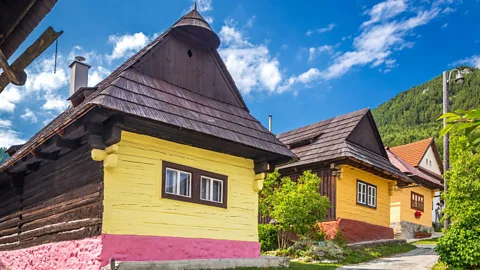
Set in the mountains of central Slovakia, the tiny village of Vlkolínec is a picture-perfect medieval hamlet with more houses than people. Its roughly 20 full-time residents live in 45 fairytale-like cottages painted in bright colours clustered around an 18th-Century bell tower.
Because of Vlkolínec’s distinctive architecture, this remarkably intact settlement was added by the United Nations as a World Heritage site in 1993. Since then, more than 100,000 visitors have descended on the community every year. Recently, some locals have argued that the designation and associated tourism has created more issues than they’re worth and want to have the village delisted.
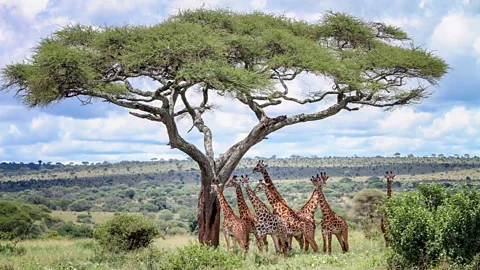
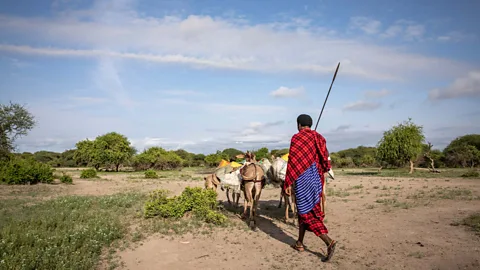
Roughly 7,000km away in Tanzania, the Maasai International Solidarity Alliance has also called for removing the wildlife-rich Ngorongoro Conservation Area from the World Heritage List. The area is home to pastoralist communities and some of Africa’s most iconic safari experiences, but locals argue that conservation policies tied to its internationally protected status have led to residents being displaced from ancestral grazing lands.
These disputes are highlighting a growing debate about what happens when the interests of local communities collide with efforts to preserve places deemed important to humanity.
Unesco’s power
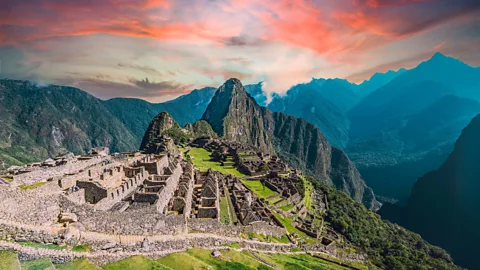
The ever-expanding World Heritage List is overseen by Unesco, an international United Nations committee that identifies and protects places it deems to have “outstanding cultural or natural importance to humanity”. Since it inscribed its first 12 sites in 1978, its list has grown to 1,248 sites across 170 countries. These range from famous landmarks such as Machu Picchu and the Great Wall of China to lesser-known places such as Romania’s Wooden Churches of Maramureș and the ancient Moroccan oasis settlements of Ait-Ben-Haddou.
The World Heritage List emerged from a post-World War Two push to protect culturally and environmentally significant places threatened by conflict, industrialisation and modern development.
Because Unesco designation can unlock international conservation funding, it is one of the world’s most influential tools for heritage protection. Supporters point to examples such as the Belize Barrier Reef Reserve System, which was removed from Unesco’s “In Danger” list in 2018 after stronger environmental protections were introduced; and Angkor Wat, where decades of restoration and conservation work helped save a site badly damaged by war and looting.
But since the World Heritage List’s early days, the rise of social media has increasingly made Unesco status something that may help to preserve a site while simultaneously changing the communities who live nearby through tourism.
 Alamy
AlamyGreg Richards, a researcher who studies cultural tourism and overtourism, compares the Unesco designation to star ratings in guidebooks that point tourists to “must-see” places. He also notes that more visitors is one of the most predictable results of being added to the list.
“I think the consensus among the leading experts in the world is that there is a whole range of possible things that can result from getting a Unesco listing, but one that will definitely happen is increased visitation.”
Historically, Unesco preservation efforts were primarily focused on protecting physical structures: monuments, archaeological sites and architecturally significant buildings. But many modern heritage destinations now overlap with communities where residents still live and work.
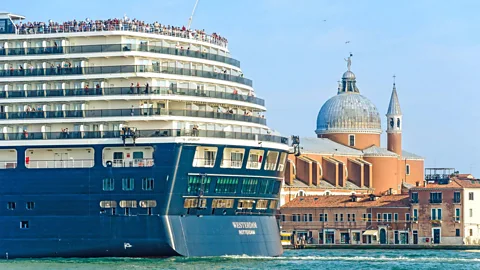
Venice, Italy, which became a Unesco World Heritage site in 1987, has seen such increased tourism that the city has become one of Europe’s most overtouristed places – and more residents are leaving as a result. In Lijiang, China, a city known for its Old Town and Naxi Indigenous culture, tourism increased after its 1997 designation, transforming parts of the centre into areas filled with guesthouses and souvenir shops that some researchers and residents say have diluted local life. In Marrakesh, Morocco, more tourism and foreign investment in the Unesco-listed medina have sparked debates about rising property prices and gentrification.
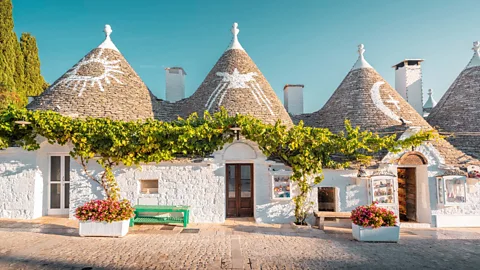
Researchers sometimes describe the process as “museumification”: the gradual transformation of living communities into places increasingly oriented around visitors rather than residents. While many historic communities were already grappling with housing shortages and economic change long before Unesco recognition, in some cases – as with Venice – tourism merely accelerates existing trends.
“This is one of the big debates in heritage conservation,” Richards says. “Authenticity is a very dangerous word because it can be interpreted in all sorts of different ways.” He explains that what one group sees as authentic preservation, another might see as artificial reconstruction.
Unesco sites are not prohibited from modernising, but developments are expected to preserve what the organisation calls a site’s “outstanding universal value” – the defining qualities that earned it designation in the first place. In practice, that can create tensions between preservation and contemporary needs, particularly in communities that still require updated housing and infrastructure.
Richards also says that social media has greatly accelerated the pace at which tourism pressure builds. Before platforms like TikTok and Instagram, travellers mostly used guidebooks or official tourism information. “Now, increasingly, you’re following other tourists,” he says.
Unesco’s new tourism approach
Representatives say Unesco is becoming more aware that World Heritage Sites are prone to overtourism.
“We’re not trying to discourage tourism at all, but just help that tourism to support conservation and the heritage,” he says. “World Heritage Sites are there for everybody. They’re for all humanity. We do want people to visit them, to experience them.”
The shift reflects a broader evolution in Unesco’s approach. In Unesco’s early World Heritage guidance documents, tourism was mentioned only briefly and largely in the context of its potential impacts on conservation, according to DeBrine.
Today, Unesco increasingly views tourism as both a challenge and an opportunity – one that can be a force for conservation and local economies when carefully managed.
When asked if Unesco can step in when local residents feel that tourism or preservation policies are hurting their lives, DeBrine said, “We don’t really have a mechanism for that.”
Despite the calls from Vlkolínec and Ngorongoro’s Maasai advocacy group to reconsider their World Heritage status, neither site is expected to be discussed by the World Heritage Committee at its upcoming session.
Unesco can currently evaluate whether a landscape, monument or ecosystem is being adequately protected. It can list sites as “in danger” due to factors like armed conflict, climate change and uncontrolled development. It can also demand conservation measures, or – in rare cases – remove a designation altogether. But it can’t list sites as “in danger” due to the tourism it helped create.
 Getty Images
How to lose World Heritage status
To date, Unesco has only removed three sites from the World Heritage List, and in each case, the issue centered on conservation. In 2007, the Arabian Oryx Sanctuary became the first site to be removed after Oman sharply reduced the protected area amid plans for oil exploration. In 2009, Dresden Elbe Valley lost its status following the construction of a bridge, which Unesco argued fundamentally altered the landscape. And in 2021, Liverpool Maritime Mercantile City was delisted after disputes over waterfront redevelopment.
Interestingly, losing Unesco recognition has not always resulted in dramatic tourism declines. Liverpool continued attracting visitors tied to its music, sports and cultural identity after losing World Heritage status, while Dresden also remained a major tourism destination after its delisting.
Despite residents in Vlkolínec and Ngorongoro advocating to be removed from the list, Stubbs argues that this is unlikely to result in any meaningful change.
“I think it’s great that [these calls for delisting are] making a point about the problems of overtourism,” he says. “But in terms of the actual solution that will benefit the locals, as well as the monument, the answer is going to come from smart conservation planning that takes into account everything from economics to location to local people.”
