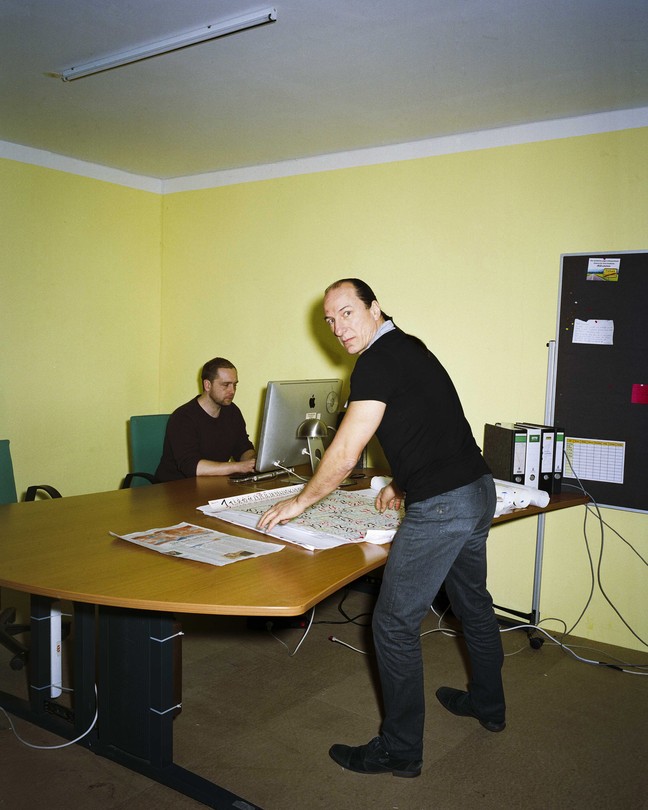
Last week, Germany arrested Peter Fitzek, 59, an anti-government figure also known as King Peter I, the Son of Man, the Messiah. Historically, attempts to arrest messiahs have met with mixed results, so to stay on the safe side, the Interior Ministry not only rolled up Fitzek and three conspirators but also shut down his whole operation, known as the Kingdom of Germany. Subjects of King Peter deny the legitimacy of the Federal Republic of Germany and, over the past 13 years, have built up a counter-state with its own institutions. “In Germany, just like in the rest of the world, we have a lot of problems,” Peter told me in 2023. “These problems could not be solved in the old system, so we needed a completely new one.” A healer, a martial artist, and practitioner of dark arts, Peter has no royal lineage and instead takes his authority from the spiritual plane. The German government alleges that he ran unregulated financial systems, and they banned his group outright.
Peter was born in East Germany in 1965. East Germany was poorer than the West then and remains so decades after unification, in 1989. Its failure to catch up economically has led to resentment by many easterners, who consider themselves neglected and forgotten. The far-right Alternative for Germany party, which now controls a quarter of the seats in the German Parliament, campaigned in the East on promises to increase the region’s political power. The AfD lost and was officially accused of extremism. The center-left coalition that won is now cracking down on the broader movement of eccentric political discontents. Peter, it seems, was a familiar type of East German from that generation—too old to learn the ways of the new Germany, and too ambitious to be satisfied watching others succeed where he failed. According to a profile in Bloomberg Businessweek, Peter spent his early adulthood getting outwitted in business by West Germans, originally as the bilked investor in a slot-machine racket.
When I met Peter two years ago, he had recently acquired a castle and invited me to join him there, in an annoyingly remote Saxon village called Eibenstock, near the Czech border. The journey took four hours from Berlin, and upon leaving the Autobahn and skidding around mountain roads, I began to appreciate the significance of the remoteness. Eibenstock is far from Germany’s equivalent of coastal elites. It is like Montana or Idaho: You can do what you please, safe in the knowledge that few witnesses will see you doing it. It was quiet and empty with many private areas secluded by spruce and firs. I noticed a few tourists on a winter hike, and at the foot of the castle I had coffee at a tiny restaurant with the unimprovable name Goulash Cannon.
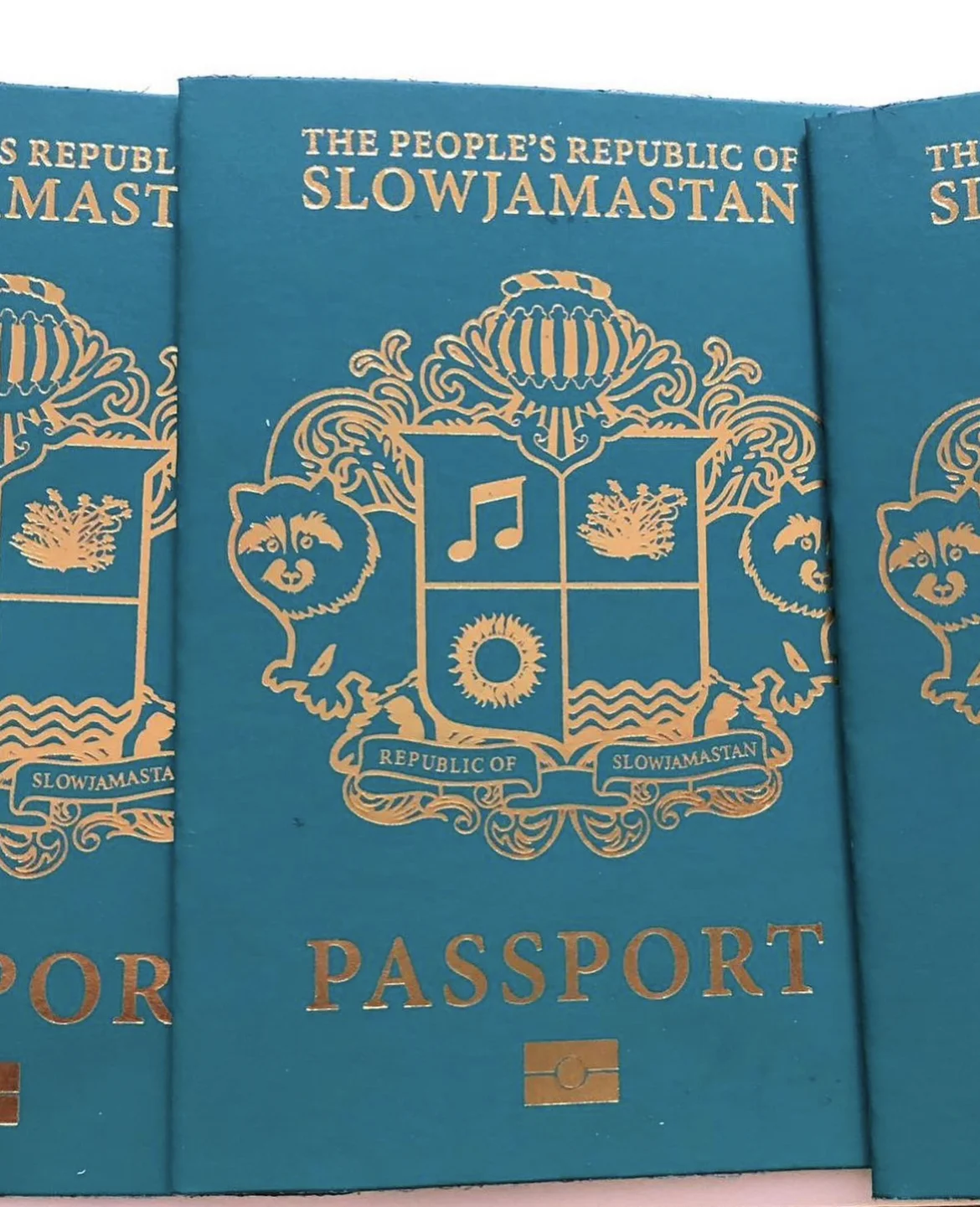
Peter came into his castle’s echoing, wood-paneled entryway, sporting a ponytail, pulled back tight and short, and wearing a monogrammed shirt with the words Kingdom of Germany in gold cursive on the breast. In this respect and others, he resembled Steven Seagal, another aging martial artist with delusions of divinity and grandeur. Peter then guided me to a sparsely furnished sitting room for my royal audience. He began, unbidden, by laying out proof that his kingship had been recognized internationally. This proof took the form of boarding passes that various airlines had honored, listing his name as “Peter of Germany.” He had a “Kingdom of Germany” passport that looked official enough, and had passed inspection, he said, at various borders. All of the airline documents I saw were from within the Schengen area, which means he could travel freely anyway. An airline agent had probably rolled his eyes and let him board his flight to Majorca. When I think of entities capable of conferring royal status, I do not think of Ryanair.
His education, he said, began under the tutelage of a contract killer he met in 1989. The man understood spirituality, Peter said, and knew how to hypnotize people and take their money. Peter read up on magic, philosophy, religion, history, and finally law, before he concluded that there was an “order to creation,” something beautiful and true, an existence freed of the corruption and disappointment of the Federal Republic of Germany. “I slowly became aware that there is a Creator,” he told me, and that this Creator had endowed him with spiritual powers that proved his divine right to rule. “I have sat as near to God as you sit to me right now,” he said. He determined that “true Christianity has never existed,” and that he had been sent to establish it. He fell in love with a woman who could move objects with her mind and set them on fire; he spent time with holy men in India; he discovered cold fusion; Satanists detected his growing powers and sent assassins after him. “I am lord of the spirits. I have an invisible army. I cannot be harmed.”
At first, he said, he tried to improve German democracy by working within the system. “Before I founded the Kingdom of Germany, I ran as a candidate for the Bundestag. I had previously talked to a lot of members of the Bundestag as well as members of the state parliament for many, many hours,” Peter told me. He said he saw how decisions were made—and how fruitless was any hope of changing a system that had grown beyond the ability of even the most patient citizen to affect. “The system interlocks in others,” he said. “It is a nested system, where you can’t change individual segments because then they don’t fit with the rest.”
Foremost among his frustrations were the modern bureaucracies that seemed designed not to serve citizens and help them prosper but to frustrate and enslave them. “The health system, the pension system, the monetary system, and the banks all have problems,” he told me. “They cannot be solved in the system. So a new one has to be started.”
He said he examined the law and found that the position of Kaiser, supposedly abolished, remained vacant. All it needed was a suitable claimant—and having been anointed by the Creator, he claimed legal succession in 2009. “We had to claim this legal succession if we wanted to establish a new system throughout Germany and not do what the Allies, the Americans, imposed on us,” Peter said. Photos of his official coronation in 2012 show him in faux-ermine robes.
“We in the Kingdom of Germany take the view that there is a divine order of creation,” Peter said. “The state should be a reflection of this order of creation, and should be a completely just society or community, like nothing hitherto seen on this planet.” He conducted seminars for his followers, to show off his and his fire-starter girlfriend’s ability to leave their bodies, perform feats of physiological impossibility like slowing their heartbeats, and commune with the archangels Uriel and Metatron. To see this is to believe, he said. “The Creator sent me here to be able to establish the Kingdom, and people can choose freely whether to join.” In 2016, the state imprisoned him for taking supporters’ money in what appeared to be a totally unregulated banking scheme. An appeals court freed him after two years, and he insisted to me that his willingness to go to prison proved his divinity. “Only someone who has been called by God does that.”
Under Peter’s watch, the Kingdom practiced a kind of primitive democracy, with—crucially—a banking and insurance system totally disconnected from that of the rest of the world. But the details of how Peter ran his kingdom are irrelevant, if colorful. He said the Kingdom will choose his successor by election. “My son, for example, will not succeed me,” he told me, unless the young man exhibits supernatural powers like his father’s and convinces other citizens of his eligibility.
Peter had identified sources of frustration and indignity that might bother virtually any German: how one navigates banking, taxation, health care, law. People of much greater education and sophistication than Peter have found themselves at the mercy of these systems, and treated most heartlessly by them. Germans have a slang term, Überzwerg, which means “head dwarf,” and refers to the petty tyrants in modern bureaucracies who ruin your day by demanding forms in triplicate and inflict other minor hassles that keep you from getting something as simple as a credit card issued or a cavity filled. Navigating modern, complex bureaucratic states is difficult but comes easier if you had an elite education in a big city—the Überzwergs’ natural environment.
To people without this background, and who fail in business or politics in consequence, others’ success may look like the result of magic, fraud, or conspiracy. Peter resorted to at least the first of these and probably all three. In his castle, he described spiritual warfare with ghosts and devils. Who is an Überzwerg but a devil sent to torment you—and in the cruelest way, by taking human form and swearing up and down that he is no devil at all, only the most mundane creature, with a nameplate on his desk and a time clock on his wall? And if you discover that you are living in a premodern, enchanted world, why not go all the way and declare yourself king by divine right?
The direction our conversation took next was as predictable as it was repulsive. Peter’s ultimate prescription to treat the diseased system of money and power was to get rid of the cabal of Satanic Jews that has taken over the world outside his Kingdom. He said he did not mind Jews per se but objected to the usurers and tricksters who start and encourage all the world’s great wars, including Russia’s invasion of Ukraine; who deny his status as their redeemer; and who are conspiring to steer us all to the apocalypse.
Peter had my attention when he talked about pyrokinesis, and he had my sympathies when grousing about bureaucracy. But Jews run the world through a network of banks and Chabad houses is the most tired claim an extremist (especially a German one) can make. It was then that I lost interest and started thinking about whether the Goulash Cannon would still be loaded and ready to fire a late lunch into my face. On the way out the door, Peter stamped my passport with a Kingdom of Germany royal seal and signed it with a scribble: Peter I, Son of Man, Imperator.